| |
The Role of DLCO in Assessing
Pulmonary Gas Transfer
|
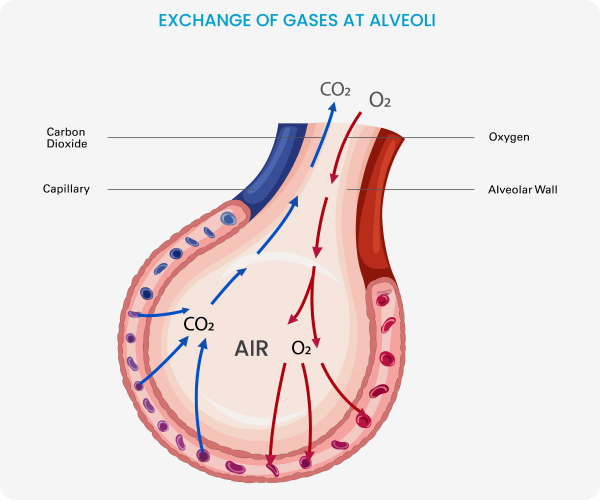
| The diffusing capacity of the lung for carbon monoxide (DLCO), also known as the carbon monoxide transfer factor (TLCO), provides information about pulmonary gas transfer that complements spirometry and lung volume measurements. While spirometry assesses airflow and exhaled volumes, DLCO evaluates the uptake of a small concentration of carbon monoxide from alveolar gas into the blood. It does not directly measure oxygen transfer but helps clinicians assess physiological processes relevant to gas exchange. |
| |
 |
| |
 |
|
What Does DLCO Measure?
Carbon monoxide binds strongly to haemoglobin, making it useful for assessing gas transfer across the alveolar–capillary interface. DLCO reflects several interacting factors, including alveolar surface area, membrane properties, pulmonary capillary blood volume and haemoglobin concentration.
It is therefore not a measurement of membrane integrity alone. A reduced result may reflect pulmonary disease, anaemia or a combination of factors. Interpretation requires consideration of the clinical context and test quality. |
|
| |
How Is the Test Performed?
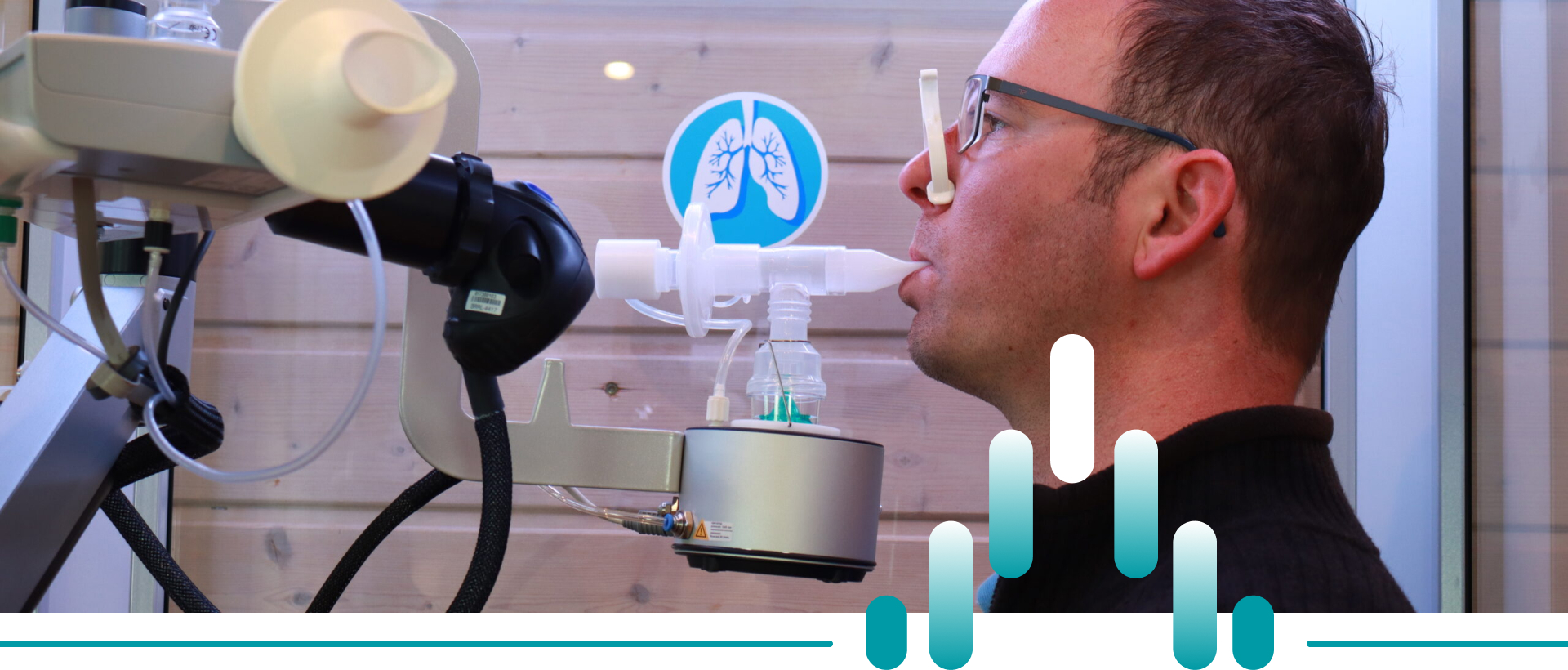
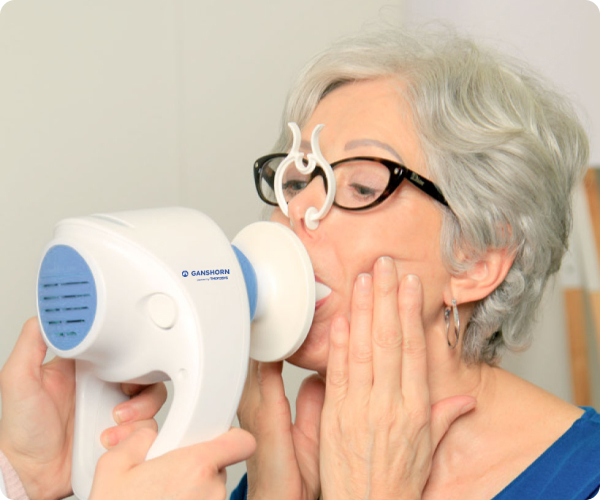
During a conventional single-breath DLCO test, the seated patient wears a nose clip and breathes through a mouthpiece. After exhaling, the patient inhales a test gas mixture containing a low concentration of carbon monoxide and an inert tracer gas, then holds their breath before exhaling for gas analysis.
ERS/ATS standards specify a breath-hold duration of approximately 10 ± 2 seconds. Testing aims to obtain at least two acceptable measurements within 2 mL/min/mmHg, equivalent to 0.67 mmol/min/kPa, of each other.
Adequate inhalation, an effective mouthpiece seal and controlled breath-holding are important. The interval between manoeuvres must allow appropriate clearance of test gas, following the equipment protocol and applicable standards. |
|
 |
|
| |
Clinical Applications
|
| DLCO can help investigate unexplained breathlessness and clarify functional abnormalities when interpreted alongside spirometry, lung volumes, imaging and laboratory findings. |
 |
| Emphysema |
May demonstrate reduced gas transfer associated with loss of alveolar surface area |
|
| Interstitial lung disease |
Helps assess gas-transfer impairment and monitor physiological change |
|
| Pulmonary vascular disease |
A low result may support further investigation, including when spirometry is preserved |
|
| Suspected extrapulmonary restriction |
A relatively preserved result may help distinguish the pattern from parenchymal disease |
|
| Anaemia |
Highlights the importance of accounting for haemoglobin concentration |
|
|
|
|
| A low DLCO is not specific to one diagnosis. Conversely, an elevated result may occur with increased haemoglobin concentration, increased pulmonary capillary blood volume or alveolar haemorrhage. |
| |
 |
|
Monitoring Disease and Recovery
Serial DLCO measurements can contribute to the assessment of disease progression or treatment response. Comparisons are most useful when testing conditions, equipment performance and relevant physiological factors are consistent.
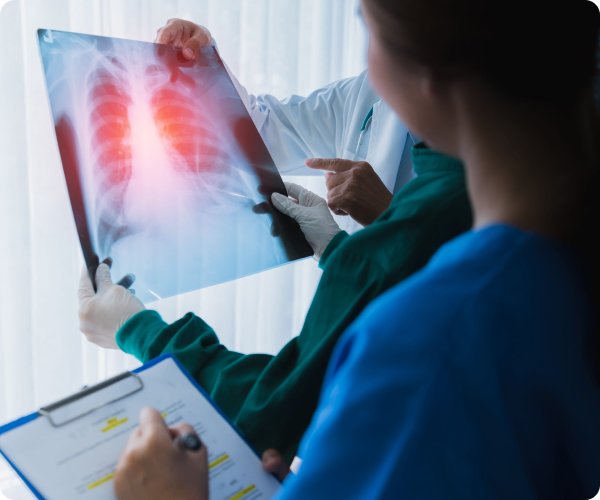
Following COVID-19, DLCO may help evaluate persistent respiratory symptoms as part of a broader pulmonary assessment. However, DLCO alone does not confirm or exclude post-COVID condition. Patients may remain symptomatic despite normal pulmonary function tests. |
|
| |
DLCO and Small Airway Dysfunction
A cross-sectional study involving 581 participants examined the association between impaired DLCO and small airway dysfunction. Participants with both abnormalities had a greater burden of several adverse clinical and physiological features, including worse symptoms and more extensive imaging abnormalities.
These findings support considering gas transfer and airway function together. However, the study demonstrates an association; it does not establish causation, predict an individual patient’s future course or prove that a particular additional treatment is required. |
|
 |
|
| |
 |
|
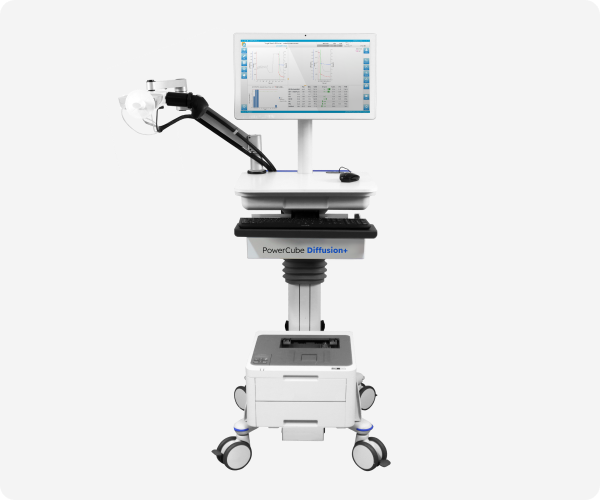
PowerCube Diffusion+: Supporting Clinical Gas-Transfer Assessment
The PowerCube Diffusion+ from SCHILLER-GANSHORN was the first CO diffusion system on the market to utilize SharpFlow (ultrasonic) technology. This advanced device features a high-speed, long-lasting sensor that requires no maintenance and allows for adjustable discard and sampling volumes, enabling measurements in patients with a vital capacity as low as 0.5 liters.
Additionally, its high-precision analyzers provide a detailed visualization of CO and helium washout curves. Its demand valve ensures efficient use of sample gas, reducing operational costs. The PowerCube Diffusion+ system can be integrated into the PowerCube Body+ Body Plethysmograph, or a standalone version. This makes it an excellent solution for pulmonary function clinics or laboratories that need to assess lung volumes but have limited space. |
|