| |
Body Plethysmography:
|
| Its Role in Chomprehensive Lung Function Assessment |
 |
| Spirometry is central to the assessment of respiratory disease, but it cannot measure all aspects of lung function. In particular, it does not measure the air remaining in the lungs after maximal expiration. Body plethysmography extends the assessment by measuring thoracic gas volume and supporting the determination of static lung volumes. It also enables measurement of airway resistance, providing additional information about respiratory mechanics. |
| |
 |
| |
 |
|
How Body Plethysmography Works
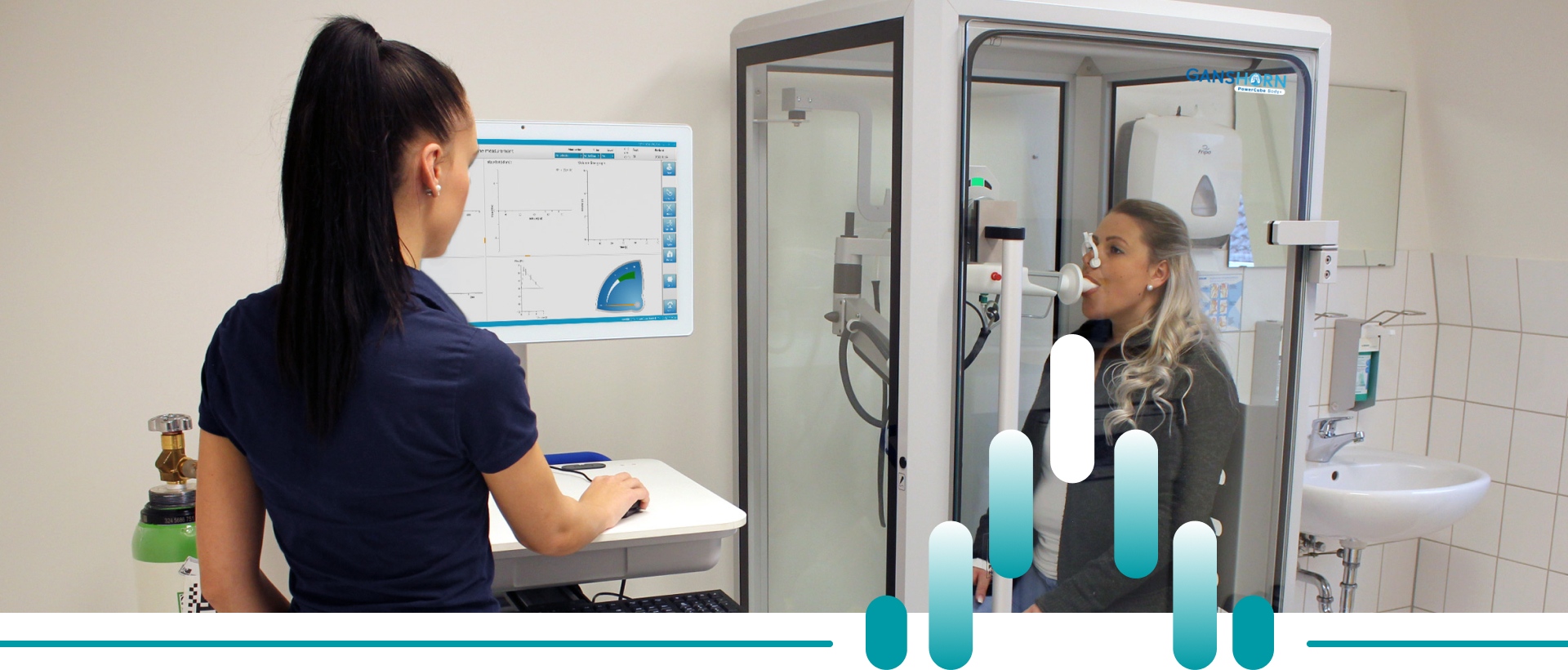
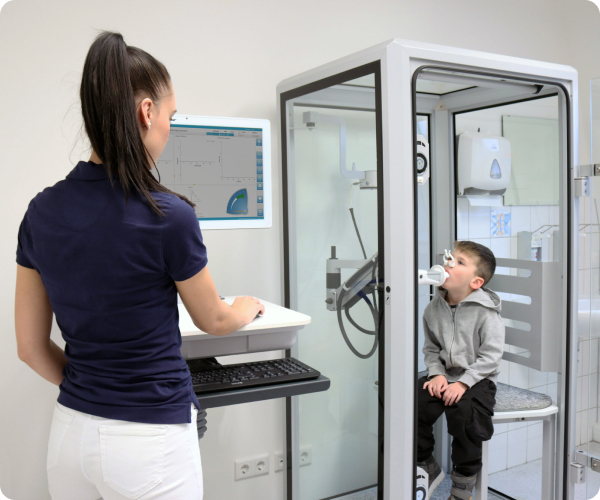
During testing, the patient sits inside an enclosed chamber and breathes through a mouthpiece. Brief shutter closures allow small changes in mouth and chamber pressure to be recorded during gentle respiratory efforts.
Using the relationship between gas pressure and volume, the system determines thoracic gas volume. When measured at the end of a normal expiration, this represents functional residual capacity (FRC).
Residual volume (RV) and total lung capacity (TLC) are then derived by combining FRC with linked spirometric measurements. These are physiologically based calculations using measured data, rather than estimates from spirometry alone. |
|
| |
| What Does the Test Add to Spirometry? |
|
| Spirometry and body plethysmography answer related but different clinical questions. |
| |
|
|
|
| A reduced FVC alone does not confirm restriction. Lung volume measurement helps distinguish a genuinely reduced TLC from other explanations, including air trapping or an incomplete expiratory manoeuvre. |
| |
 |
|
Why Is It Often Called the “Gold Standard”?
Body plethysmography is commonly regarded as a reference method for lung volume assessment because it can account for compressible thoracic gas, including gas in poorly ventilated regions.
Gas dilution and washout techniques depend on communication between the airways and the gas being measured. In marked airflow obstruction, poorly ventilated regions may not be fully represented, leading to lower measured volumes.
However, plethysmography is not free from measurement error. Severe obstruction, inappropriate panting technique and incomplete equilibration between mouth and alveolar pressures can lead to overestimation of thoracic gas volume. Its advantages therefore depend on technically sound testing and careful interpretation. |
|
| |
Clinical Applications
Body plethysmography is useful when the clinical question extends beyond the detection of airflow obstruction. Examples include investigating suspected restriction, assessing air trapping or hyperinflation, and clarifying abnormal spirometric findings.
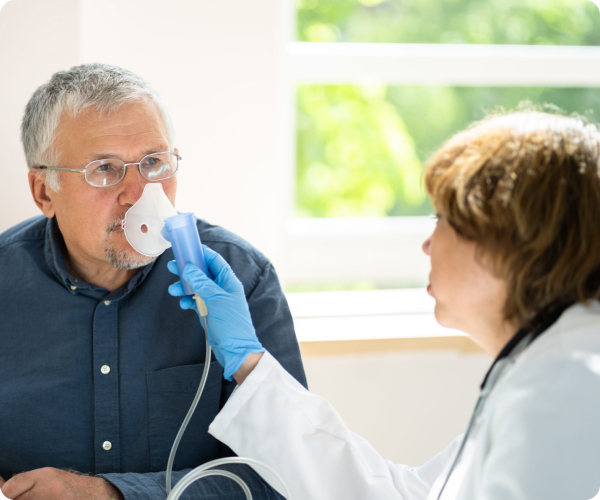
In patients with asthma or COPD, lung volumes and airway resistance can provide additional physiological information. These findings should be interpreted alongside symptoms, spirometry and other relevant investigations; body plethysmography alone does not establish the underlying diagnosis. |
|
 |
|
| |
 |
|
The Chamber & Measurement Quality
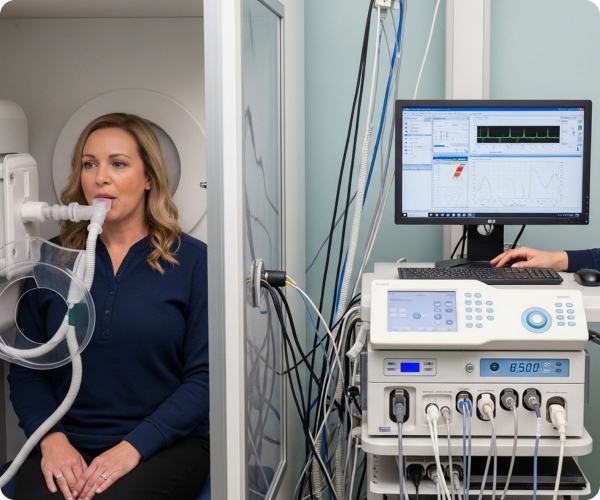
The chamber is an active part of the measurement system. It detects pressure changes associated with changes in thoracic gas volume, rather than simply providing a controlled testing environment.
Reliable results require equipment calibration and verification, appropriate patient coaching, acceptable manoeuvres and repeatable measurements. Current ERS/ATS standards address these requirements and recognise the different strengths and limitations of available lung volume techniques. |
|
| |
PowerCub e Body+:
Integrating Measurements into Clinical Practice
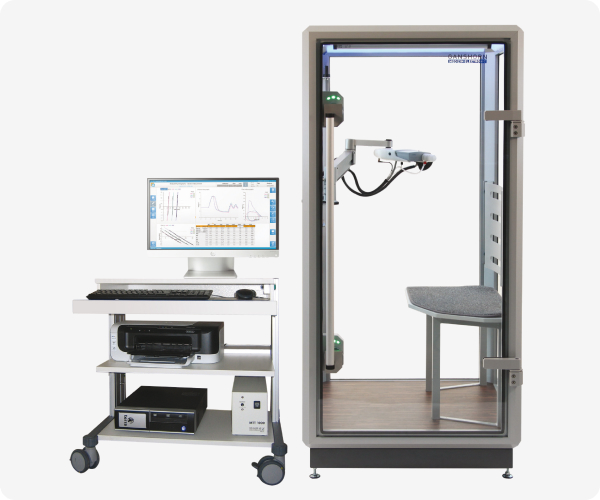
The PowerCube Body+ plethysmograph offers a state-of-the-art solution for respiratory specialists. This advanced Body Plethysmograph delivers accurate measurements of crucial lung volumes such as Functional Residual Capacity (FRC) and Total Lung Capacity (TLC).
Equipped with an ultrasonic flow sensor (SharpFlow technology), it streamlines testing by eliminating calibration needs, ensuring efficient and reliable results. |
|
 |
|